
Daniel Gurskis, Dean, College of the Arts
PEAK Performances presents
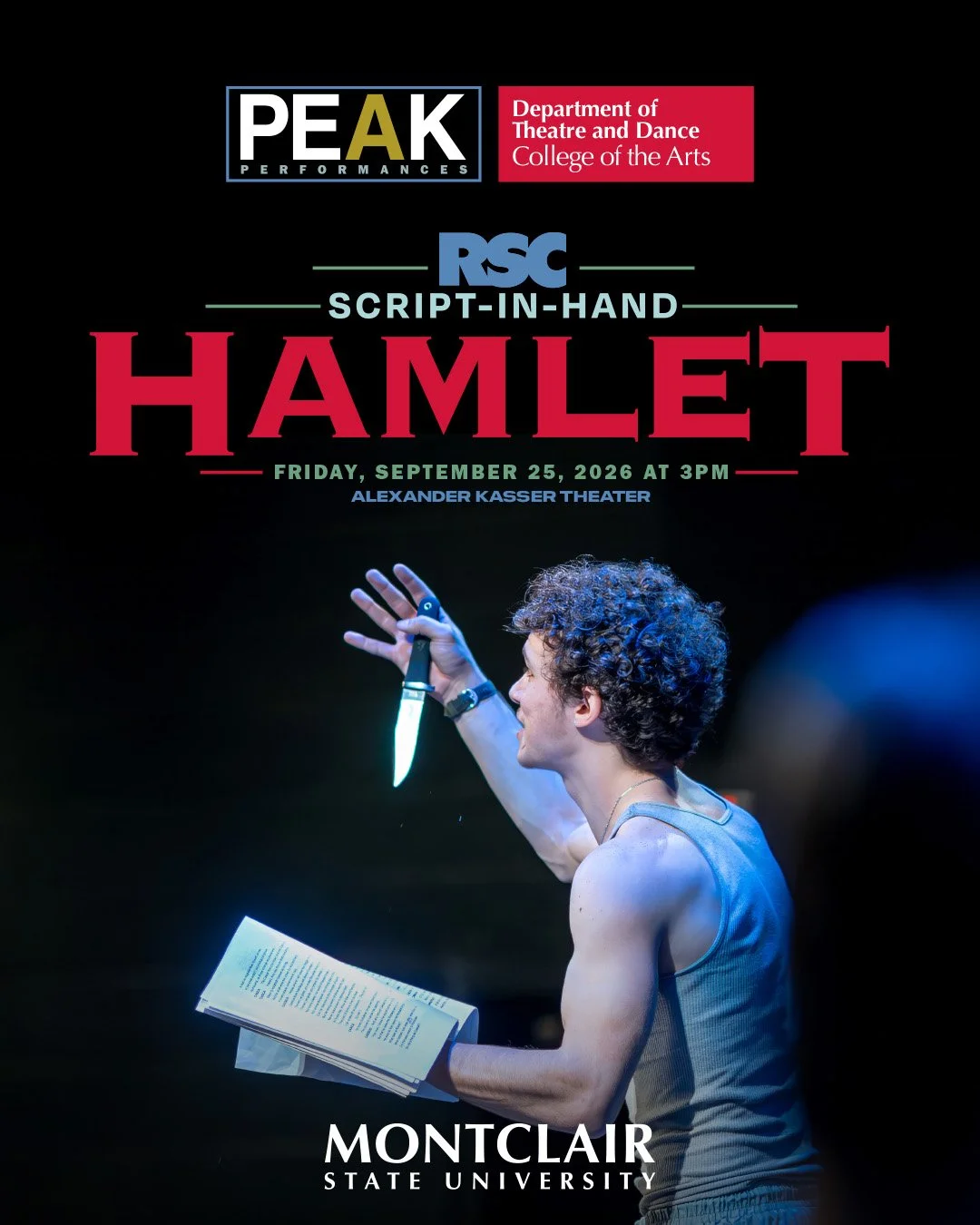
Photo credit:
RSC / Script-in-Hand
Hamlet
Fri., September 25, 2026, 3:00pm
ALEXANDER KASSER THEATER
Directed by Aaron Parsons
This program is supported by the generosity of Holly an Robert Gregory.
The Royal Shakespeare Company (RSC) is a leading global theater company that sparks local, national, and international conversations that build connections, create opportunities, and bring joy.
They passionately believe that great storytelling can change the world, and that theater offers its own unique form of storytelling: it’s live and shared, and transforms a group of strangers into audiences who, together, experience a story come to life in front of their eyes.
RSC collaborates with the most exciting artists to tell the stories of our time, and through a range of programs they nurture the talent of the future.
They perform on three stages in their home in Stratford-upon-Avon, in London and in communities and schools across the UK and around the world.
RSC’s transformative Creative Learning and Engagement programs reach over half a million young people each year, and in September 2026 the company celebrates 20 years of working in partnerships with schools.
About the Company
Things aren’t quite as they seem in the state of Denmark.
The king is dead, but his brother steps in to take his crown, his wife, and become a father to his son. Can everyone move on and show a united front from the external threat of war? Or is war already brewing in the castle?
Why this play now?
Hamlet, a play said to be named after his own son, Hamnet, who tragically died too young, feels like an outpouring of Shakespeare’s own grief in a moment in Shakespeare’s life when he had to find a way to carry on.
When the worst possible thing happens, how do you find the strength and resolve to keep moving forward? Can we ultimately carry that pain with us and still live?
The play, in my opinion, finds a way to articulate what grief can do to an individual, as well as how it can corrode a family.
Helpfully, Shakespeare creates a framework where there is someone accountable. Someone to blame. Someone who is driven by a need to take control of a nation, and whose absolute determination to do so sees him committing unthinkable acts, not only to take the crown, but also to try and stay in power.
It is exactly those two things that feel important in our exploration of this play. How can one person’s greed cause so much suffering, without leading to them ultimately being satisfied with what they have taken? And how that greed ultimately changes our ability to trust, and believe in each other. Ideas I think we can all agree feel very present in our world today. Where one person’s actions impact individuals, families, and an entire nation. All leading to I think Shakespeare’s ultimate question: what would you do, if you were in this situation? Or more importantly, what do we learn about ourselves and the world from experiencing this story?
—Aaron Parsons, Director
Program Notes
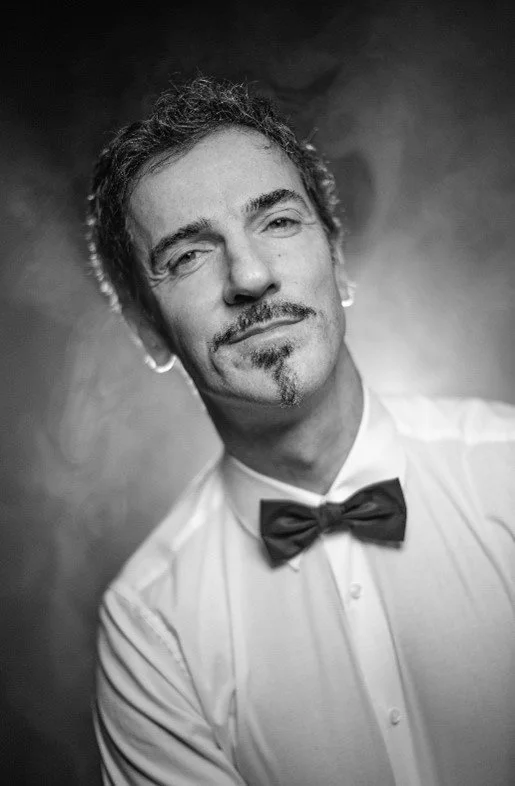
About the Artist
Hervé Koubi (Choreographer) began his journey as a contemporary dancer for acclaimed choreographers such as Karine Saporta, Claude Brumachon, and Thierry Smits. In 2000, he launched his own choreographic project, initially driven by an interest in tradition and the way movement is passed down through generations. His work seeks to bridge the gap between the social dances and the cultures of today with a dance that gathers, unites, builds links between people. A search for his roots led Koubi to Algeria, where he underwent a creative transformation through a pivotal encounter with urban dance. Since then, he has explored the “porosity” of movement, blending technical and aesthetic styles to create a language that defies traditional categories. Since 2017, Koubi has collaborated closely with dancer and choreographer Fayçal Hamlat, whom he met while serving as the choreographer for the National Ballet of Algiers. Their partnership is built on a unique exchange: while Koubi moved from contemporary dance toward hip-hop, Hamlat took the opposite path. Together, they redefine 21st-century ballet as a field choreography—an inclusive practice that honors history while remaining vibrantly modern. In 2015, Koubi was appointed a Chevalier des Arts et des Lettres for his contributions to the arts.
PEAK Performances
Peg Schuler-Armstrong | General Manager
Hannah Walker | Interim Marketing Manager
Taliyah Bethea | Marketing Assistant
Susan Case | Program Book Coordinator
Patrick Flood | Graphic Designer, Art Director
Martin Halo | Website Development
Social Sidekick | Public Relations
Jacob Stepansky | Company Manager
College of the Arts
Daniel Gurskis | Dean
Ronald L. Sharps | Associate Dean
Christine Lemesianou | Associate Dean
Amanda Gonzalez Carcione | Assistant Dean
Zacrah S. Battle | College Administrator
Nicole Archer | Chairperson, Department of Art and Design
Shea Scruggs | Director, John J. Cali School of Music
Kathleen Kelley | Chairperson, Department of Theatre and Dance
Hillery Makatura | Director, Performance Operations
Patricia Piroh | Director, Broadcast and Media Operations
Megan C. Austin | Director, University Galleries
Staff Credits
College of the Arts
Performance Operations
Hillery Makatura | Director
Cubby Terry | Facilities and Events Manager
Colin Van Horn | Technical Director
Kevin Johnson | Senior Production Engineer
Jason Flamos | Lighting Supervisor
Marlene Hamm | CPO Production Manager
Jade Thomas | Patron Services Manager
Jeff Lambert Wingfield | Box Office Manager
Rayne Collins | Front of House Coordinator
Laurel Brolly | Business Manager
Charlotte Caplan, Ava Defabbo, Abigail Drueding, Hendryana Nelson, Tori Opitz | Lead Ushers, Season 2026–27
Andrea Armando, Ityaina Bush-Patterson, Aboubacar Cisse, Audrick Franco, Shantel Maysonett, Ashley Sabina Pajares, Aiden Park, Ben Renfrow | Box Office Lead Associates, Season 2026–27
Coming Soon




We respectfully acknowledge that Montclair State University occupies land in Lenapehoking, the traditional and expropriated territory of the Lenape. As a state institution, we recognize and support the sovereignty of New Jersey’s three state-recognized tribes: the Ramapough Lenape, Nanticoke Lenni-Lenape, and Powhatan Renape nations. We recognize the sovereign nations of the Lenape diaspora elsewhere in North America, as well as other Indigenous individuals and communities now residing in New Jersey. By offering this land acknowledgement, we commit to addressing the historical legacies of Indigenous dispossession and dismantling practices of erasure that persist today. We recognize the resilience and persistence of contemporary Indigenous communities and their role in educating all of us about justice, equity, and the stewardship of the land throughout the generations.
Programs in this season were made possible, in part, by the Alexander Kasser Theater Endowment Fund and PEAK Patrons.
PEAK Performances develops, presents, and produces a broad range of world-class dance, film, master classes, music, opera and music theater, talks, and theater in the Alexander Kasser Theater on the campus of Montclair State University for students, faculty, staff, and the general public. We are building community through live performance. PEAK Performances is a program of the university’s Arts + Cultural Programming Department.